Friday, September 27, 2013

APOD #3

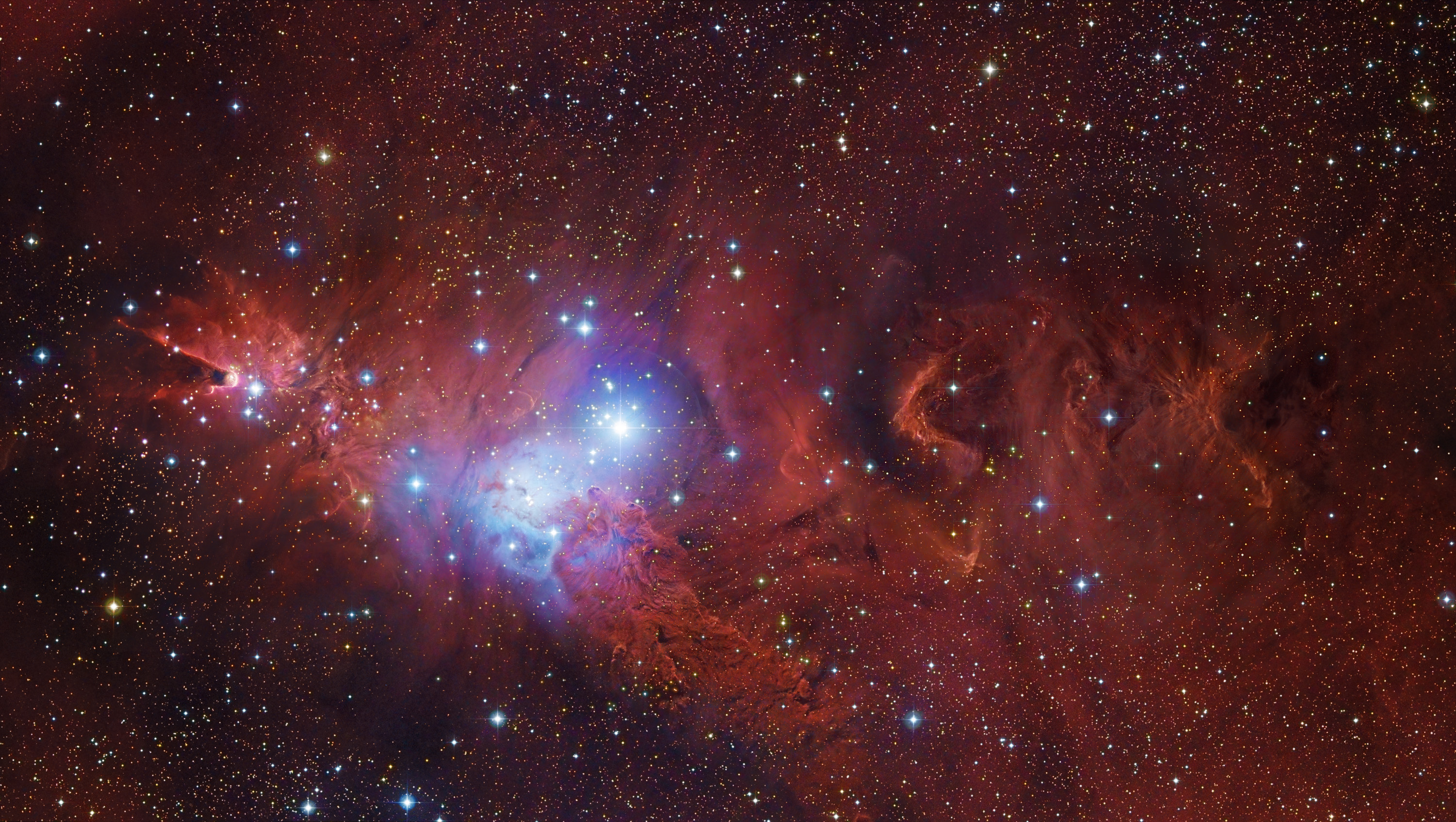
Interstellar dust collects around the Cone Nebula, creating several interesting shapes. Pictured, the brightest star is called S Mon, and beneath is an area nicknamed the Fur Fox Nebula. The bluish color surrounding S Mon is a color reflected by the surroundig dust. The red color is also created by reflection, but also because of the emission from hydrogen gas that was ionized by starlight. S Mon is part of a star cluster, NGC 2264, which is about 2500 lightyears away located closes to the constellation Monoceros (the Unicorn). The origin of the Cone Nebula has still to be discovered.

Friday, September 20, 2013

APOD #2


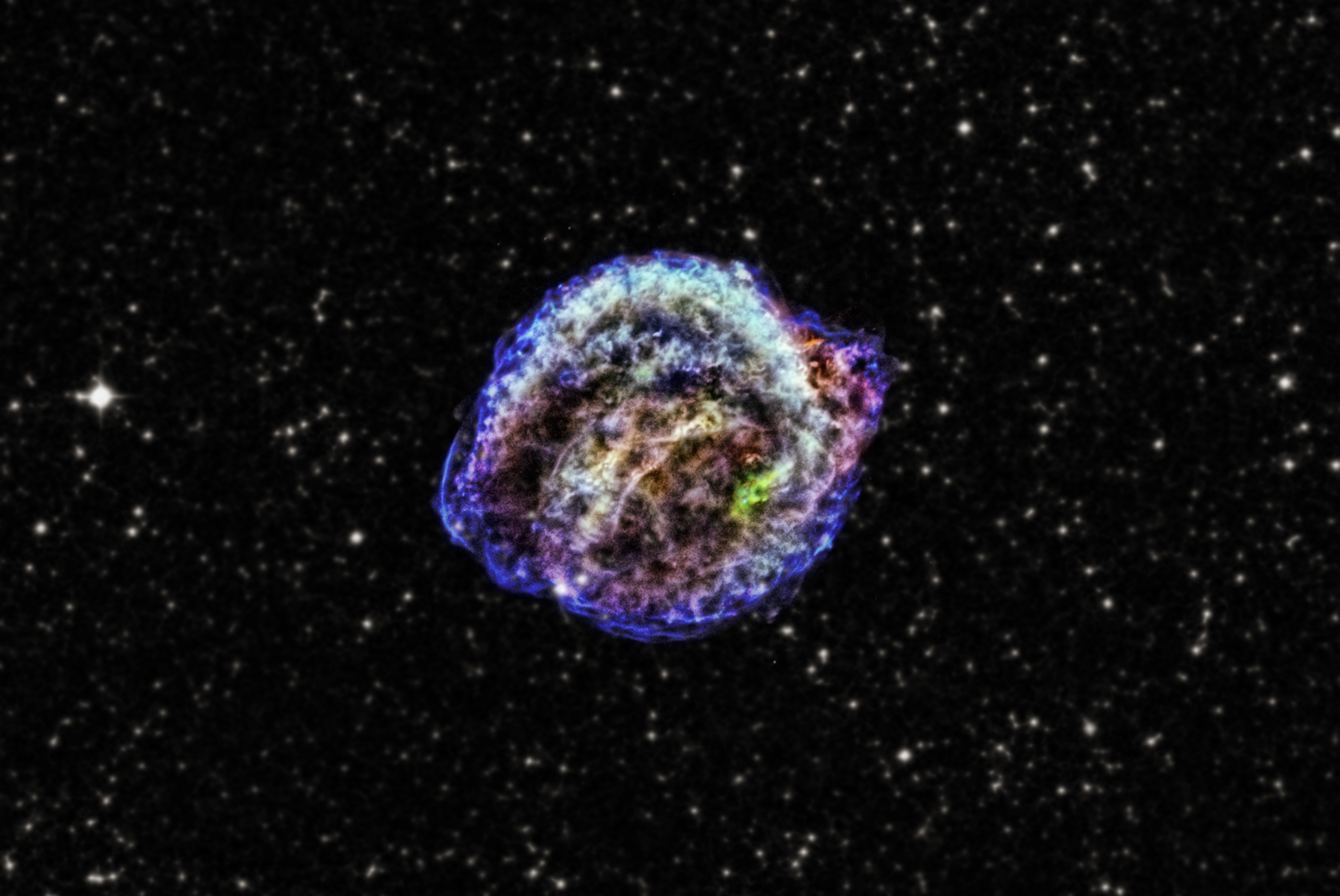
Kepler's Supernova Remnant received some attention from NASA on May 15th, 2013 due to the x-ray data and photographs from the orbiting Chandra X-Ray Observatory. It had long been speculated of what kind of supernova it was. First observed by Johannes Kepler in 1604, a brighter-than-normal star appeared in the night sky in the constellation Ophiuchius and only the second supernova to be observed (the first being the supernova in Cassiopeia by Tycho Brahe). It nas now been revealed that Kepler's Supernova Remant is a Type Ia supernova, previously being a white dwarf star that had sucked in too much material from a companion red giant. This supernova is about 13,000 light-years away and is known as the most recently observed supernova.   

Friday, September 13, 2013

APOD #1

These two galaxies, NGC 5426 and NGC5427, are about to collide. They are collectively known as Arp 271 and cover about 130,000 light years. They are close to 90 million lightyears away toward the Gemini constellation. Normally, when this happens, a bigger galaxy eats a smaller one, but these are about the same size and are relatively the same in nature. I think that the two component stars may collide to form one bigger one, or just start to orbit each other. Maybe they'll just pass through each other. New stars will definitely be born in the compression of gasses of the two galaxies. There are suspicions that this same effect will happen between The Milky Way and the Andromeda galaxy, which is both exciting and nerve-racking for Earth.